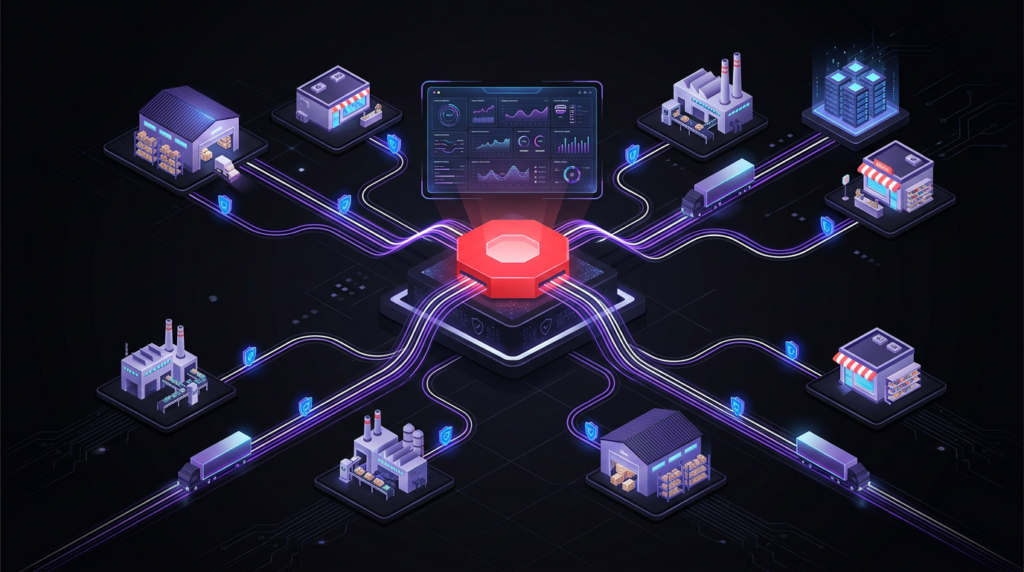
Centralize, automate and secure your supply chain. Reduce operational costs, speed up partner onboarding and ensure compliance with European regulations, including NIS2.
A fragmented supply chain is a risk you can’t afford
Anomalies that come to light only after the damage has already been done. If you manage a supply chain in retail, distribution, manufacturing, or logistics, you’re probably familiar with these challenges.
- Fragmented integration: ERP, OMS, e-commerce, and production systems—each platform speaks a different language. The result is errors, delays, and hidden costs
- Slow partner onboarding: each new supplier or customer requires weeks of manual setup. This limits growth and competitiveness.
- Lack of end-to-end visibility: without a centralized monitoring point, anomalies are detected too late. By the time the alert is triggered, the impact is already underway.
- Risk of non-compliance: The NIS2 Directive extends security requirements to the entire supply chain. Failure to comply exposes organizations to penalties and liability
- Legacy systems that slow down innovation: outdated technologies that do not support APIs, the cloud, or modern standards. A technical debt that grows every quarter.
- Out-of-control operational costs: manual processes, repetitive tasks, reactive management of mistakes. Resources that could be invested in higher-value activities
- Every platform and every partner uses its own language (EDI, XML, JSON…), which is exactly why you need an integration layer capable of translating and harmonizing these different data formats.
If at least two of these scenarios sound familiar to you, it’s time to rethink your digital supply chain.
Enhance Your Supply Chain with Smart, Connected Automation
IBM automation solutions enable you to build a centralized, orchestrated, and fully automated supply chain capable of ensuring agility, operational continuity, and maximum visibility into every strategic flow.