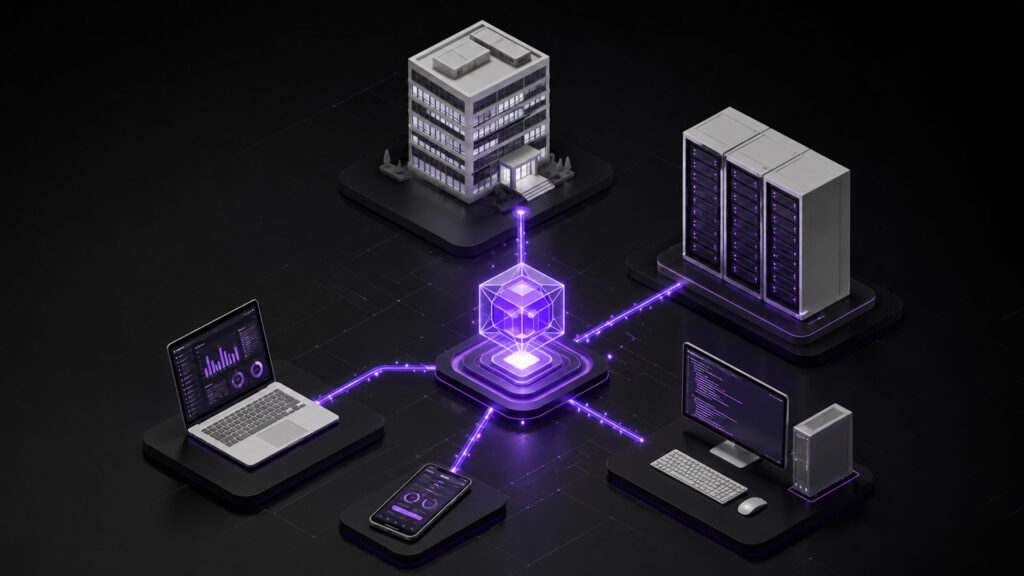

Over the past two decades, the global financial ecosystem has undergone an unprecedented transformation. Today, transferring money from one country to another is almost as easy as sending a WhatsApp message. From paying for an online purchase to making an international bank transfer, payment transactions are part of our daily lives and, at the same time, support the global economy.
This evolution has become even more evident in recent years, both due to the need to establish regulatory guidelines—mainly by central banks—and due to the constant search for improvements in messaging systems, with the aim of achieving greater efficiency and security while reducing costs.
The global payment network: opportunities and challenges
Every second, millions of transfers cross borders in a network connecting banks, fintech companies, clearing houses, and payment systems across all continents. From an online purchase in Tokyo to a corporate transfer between New York and Madrid, payments are now faster, more accessible, and more interdependent than ever before. This globalization, promoted by standards such as ISO 20022, networks like SWIFT, and the introduction of new instant payment methods like Bizum, offers enormous opportunities for efficiency and growth, as well as concrete benefits for users. However, it also poses unprecedented challenges and entails new risks.
This global reach and the large number of technologies that characterize the modern payment system have also created an exponentially larger attack surface for cybercriminals. Every connection point, every message, every integration API, and every mobile device used to authorize a transaction represents a potential gateway for fraudulent activity.
Security as a strategic imperative
Ensuring the security of the integration solutions that enable all this interconnectivity has become a strategic imperative, highlighting the need to strengthen it at all levels. Protecting a payment involves taking care of every detail: from encrypting messages traveling over networks to complying with international standards that prevent fraud or money laundering. It also requires well-designed internal processes, constant monitoring, and, equally important, a culture of prevention among users themselves.
We are therefore faced with security levels in channels, infrastructure, and communications. In the case of banking messaging, we have, for example, the SWIFT network, with its InterAct channels (for message exchange) and FileAct (file-oriented communication), which, thanks to the use of signatures and certificates (RMA), together with Non-Repudiation or Delivery Notification features, make it possible to certify who sent what, to whom, and when, making security one of the fundamental pillars of the SWIFT network and banking intercommunication.
Professional tools for secure data management
Just as we must ensure the security of payments sent to our correspondents or market infrastructures, we must also rely on reliable solutions for exchanging information between our applications or within our company. In this area, tools such as IBM Direct Connect stand out, not only allowing us to manage large volumes of data—useful, for example, for processing large batches of payments or report files for corporate clients—but also offering unparalleled security in the exchange of information.
It is also normal for companies or financial institutions to need to process and transform the information or payments they receive through one channel before redirecting them to another. Therefore, taking care of the data, transforming it in a secure environment, and validating it are fundamental steps in this whole process. This is where solutions such as IBM MFT, with its managed file exchange platform that enables secure, automated, and reliable data transfer, provide the necessary security and guarantees.
In a context where data protection is fundamental, NEVERHACK offers comprehensive solutions ranging from risk analysis to secure data transfer and storage, ensuring regulatory compliance and protecting information from unauthorized access.
Instant payments and open APIs: new security frontiers
On the other hand, the spread of instant payments has brought with it an ecosystem that is increasingly dependent on open APIs, promoted by European regulations such as PSD2 and, with PSD3 and its open finance on the horizon. Solutions such as Bizum or Wero exemplify the enormous progress in real-time payments that we make every day, but at the same time require highly resilient security architectures that protect our data and operations. In this case, solutions such as IBM webMethods API Management, which make API management transparent, simple, and secure, can offer us great added value.
To further strengthen IT infrastructure security, it is essential to rely on professional offensive security services. NEVERHACK conducts comprehensive penetration testing and vulnerability assessments to identify weaknesses that could be exploited by cybercriminals, simulating real attacks to evaluate security defenses and test detection and response capabilities under realistic conditions.
Continuous monitoring and incident response
Cybersecurity is not limited to prevention: it is also necessary to be ready to respond promptly when an incident occurs. SOC/MSSP services from NEVERHACK offer 24/7 monitoring, threat detection, and incident response, providing specialized expertise and continuous oversight to identify and mitigate risks while ensuring regulatory compliance.
This proactive approach improves the overall security posture, protects sensitive data, and ensures business continuity, allowing organizations to focus on growth without security concerns.