
How Managed File Transfer (MFT) platforms and B2B integration architectures will ensure operational continuity and protect global information against the most demanding transaction peaks of the decade
The invisible infrastructure behind the World Cup
Imagine a fan arriving in Mexico City, requesting a ride through a mobile app, paying with a credit card issued on another continent, checking into a hotel digitally, purchasing official merchandise online, and receiving a notification granting access to the stadium. In less than an hour, dozens of organizations will have exchanged hundreds of digital messages behind the scenes among banks, airlines, payment platforms, logistics providers, and government systems.
This invisible network is the true infrastructure behind the 2026 FIFA World Cup.
In my daily work designing and implementing integration architectures and secure data exchange platforms, I often see a dynamic similar to what happens on the football pitch. Just as a midfielder needs vision, precision, and control to connect defense with attack and keep the game flowing under pressure, integration technologies play the same strategic role within organizations. Their mission is to ensure that business operations never stop.
In 2026, my beloved country—Mexico—will have the honor of hosting the world’s most important sporting event for the third time in its history. While much of the conversation focuses on stadiums, transportation, and tourism infrastructure, IT leaders face an equally critical challenge: ensuring that this massive ecosystem of digital processes operates seamlessly, continuously, and securely.
Data security and sovereignty in a hyperconnected ecosystem
In a hyperconnected environment, moving data from one point to another is only half the challenge; the other half is doing it securely.
As financial, logistics, and personal information from citizens around the world moves across public and private networks, on-premises environments, cloud platforms, and hybrid infrastructures, the attack surface expands exponentially.
For CIOs and CISOs, the event demands much more than functional connectivity. Organizations must ensure end-to-end encryption, strong authentication, and data sovereignty while complying with international privacy regulations such as GDPR.
At this scale, a file transfer breach does not simply interrupt a business process—it can damage reputation and erode trust on a global level.
When data fails to arrive, the problem stops being technical
A simple disruption or alteration in the flow of information can trigger significant downstream consequences.
A payment that is not confirmed within milliseconds creates commercial bottlenecks. An Electronic Data Interchange (EDI) document batch delayed at customs can affect merchandise availability and disrupt supply chains.
What may appear to fans as a simple “system error” can translate into financial losses, business continuity challenges, and severe operational risks for organizations.
This is why resilience and cybersecurity have become strategic pillars for every company involved in large-scale digital ecosystems.
Enterprise integration: the technology nobody sees but everyone depends on
For decades, organizations have invested in technologies that connect applications and enable secure information sharing across their business ecosystems.
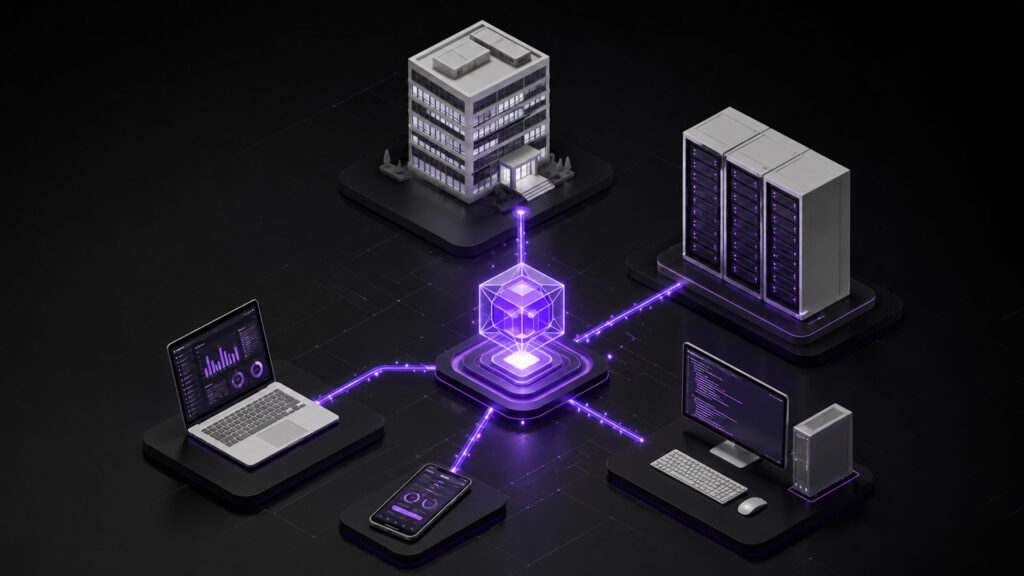
Today, these capabilities are powered by architectures that combine APIs, B2B integration, Electronic Data Interchange (EDI), and Managed File Transfer (MFT) platforms.
For IT leaders, the value of these technologies goes far beyond connecting systems. Their real purpose is to provide governance, visibility, traceability, auditability, and security for every piece of data entering and leaving the organization.
Enterprise integration is no longer simply an IT cost center—it has become a strategic enabler of growth and a critical layer of cyber resilience.
World Cup 2026 as a catalyst for digital transformation
The World Cup arrives at a particularly strategic moment for Mexico, as the country experiences accelerated nearshoring growth, logistics modernization, and increasing digital transformation across industries.
In this context, supply chain modernization is fundamentally a B2B integration challenge.
Organizations capable of strengthening their data exchange architectures and cybersecurity posture to support World Cup-level demand will also be better prepared to absorb the transaction volumes generated by long-term nearshoring opportunities.
The capabilities required to support a global sporting event are the same capabilities needed to compete successfully in an increasingly digital economy.
An opportunity to look beyond football
History has shown that major global events often accelerate technological progress.
For the 1970 FIFA World Cup, the challenge of broadcasting the tournament live and in color to a global audience drove the development of Mexico’s first large-scale satellite communications infrastructure. In 1986, the deployment of the Morelos Satellite System—Mexico’s first telecommunications satellites—not only supported event coverage but also provided the country with a resilient communications network at a critical time.
From my experience designing mission-critical architectures, I believe the technological legacy of the 2026 World Cup will be just as significant, although in a different domain.
If the challenge in 1970 and 1986 was connecting antennas and satellites, today’s challenge is securing, governing, and integrating data.
The true legacy will be the level of digital maturity and cybersecurity readiness achieved by organizations and institutions as they adapt to operating within an interconnected, dynamic, and highly demanding B2B ecosystem.
With the 2026 World Cup now underway, millions of transactions are already taking place behind every ticket, payment, reservation, and delivered product.
Because in the digital economy, major events do not simply move people.
They move data.
And just as those first satellite transmissions transformed Mexico decades ago, today it is secure, governed, and real-time data integration that will shape the foundation of business infrastructure for decades to come.