
Organizations often discover an attack only after it has left traces in their environment: a suspicious login, an unusual data transfer, or the execution of malware. However, in many cases, the first warning signs appeared weeks or even months earlier, long before any event was recorded in a log.
Why log monitoring alone is no longer enough
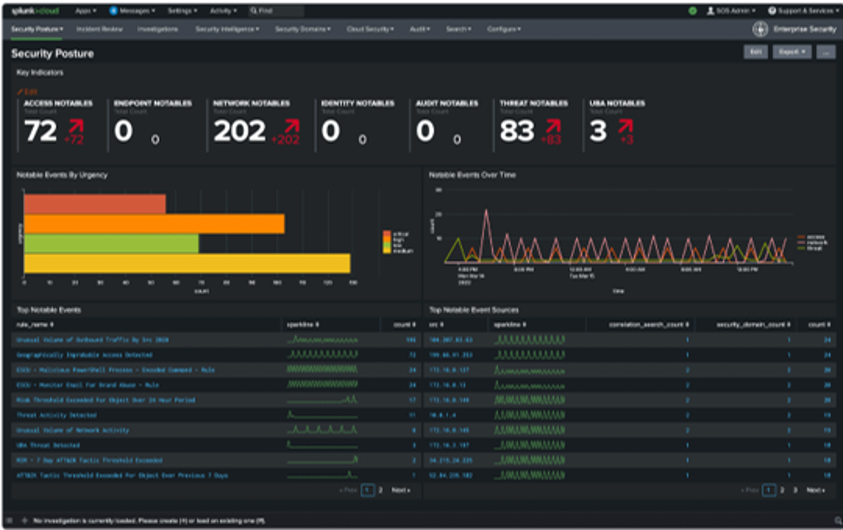
For years, security teams have relied on logs collected from firewalls, servers, applications, and network devices to detect malicious activity. Security Information and Event Management (SIEM) platforms process millions of events every day, helping analysts identify anomalies and respond to incidents quickly.
The challenge is that by the time an event reaches your SIEM, an attacker may already have established a foothold, stolen credentials, or begun moving through the environment.
Traditional monitoring remains essential, but it is no longer enough on its own. Organizations also need Threat Intelligence capable of identifying risks before they become security incidents. By combining Threat Intelligence, Open Source Intelligence (OSINT), and Dark Web monitoring, security teams can move from reactive detection to a far more proactive approach.
The challenge of relying solely on logs
Logs remain one of the most valuable sources of information for incident detection and forensic investigations. They provide detailed visibility into what has already happened inside an organization’s infrastructure.
The limitation is that they only reveal activity after it has taken place.
For example, there may be days, or even weeks, between the moment an employee’s credentials are stolen and the moment they are used to access corporate systems. During that time, no internal security event may be generated, even though the compromise has already occurred.
Meanwhile, stolen information may already be circulating across underground marketplaces, criminal forums, ransomware leak sites, malware distribution networks, or private communication channels, areas that remain completely invisible to a traditional SIEM.
Threat Intelligence: expanding visibility beyond the perimeter
Threat Intelligence is the process of collecting, analyzing, and contextualizing information about cyber threats to understand who attackers are, how they operate, and which organizations are most likely to become their next targets.
Today, Threat Intelligence extends far beyond maintaining lists of malicious IP addresses. It provides visibility into attacker infrastructure, active campaigns, newly registered malicious domains, emerging malware families, ransomware activity, compromised credentials, and threat actor profiles.
This intelligence gives organizations the context they need to make informed security decisions before attackers reach their internal systems, helping security teams identify risks earlier and prioritize their response more effectively.
OSINT: public information with strategic value
Open Source Intelligence (OSINT) uses publicly available information to uncover security risks that organizations often overlook.
Common findings include:
- Forgotten subdomains
- Public repositories exposing sensitive secrets
- Digital certificates
- Public IP addresses
- Corporate email accounts
- Cloud infrastructure
- Technologies used across the organization
Although this information is publicly accessible, correlating these data points allows both defenders and attackers to build an accurate picture of an organization’s attack surface.
In fact, cybercriminals routinely use these same techniques during the reconnaissance phase of an attack. Identifying this exposure first gives organizations the opportunity to reduce risk before it can be exploited.
Dark Web: where attacks often begin
The Dark Web is often associated with illegal activity, but for security teams it is also one of the most valuable sources of Threat Intelligence.
It is common to find:
- Leaked databases
- Corporate credentials
- Stolen session cookies
- Authentication tokens
- VPN access information
- Discussions among threat actors
- Initial Access Broker (IAB) listings
Finding a compromised corporate account before it is weaponized can make the difference between proactively resetting a password and responding to a full-scale identity compromise weeks later.
For example, credentials stolen by infostealer malware are frequently offered for sale long before attackers attempt to use them against the affected organization.
Credential leaks: one of the most common entry points
Compromised credentials remain one of the most common ways for attackers to gain initial access to corporate environments.
These credentials are not always stolen directly from the targeted organization. More often, they originate from:
- Infostealer malware
- Password reuse
- Third-party data breaches
- Phishing attacks
- Accidental exposure
When organizations detect leaked employee credentials early, they can take immediate action to reduce the risk of unauthorized access.
Typical mitigation measures include:
- Resetting affected passwords
- Revoking active sessions
- Rotating exposed secrets
- Validating Multi-Factor Authentication (MFA)
- Investigating recent authentication activity
Early detection significantly reduces the window of opportunity for attackers and helps prevent compromised credentials from becoming the starting point of a larger security incident.
IOC vs. IOA: understanding the difference
Many organizations still build their detection strategies primarily around Indicators of Compromise (IOCs).
An IOC represents evidence that malicious activity has already taken place.
Common examples include:
- Malware hashes
- Malicious IP addresses
- Known phishing domains
- Malicious URLs
The challenge is that attackers constantly change their infrastructure, making many IOCs short-lived and less effective over time.
Indicators of Attack (IOAs) take a different approach. Rather than focusing on infrastructure, they identify suspicious attacker behavior.
Examples include:
- Unusual privileged account creation
- Lateral movement
- Privilege escalation
- Abuse of administrative tools
- Logins from unusual geographic locations
- Suspicious PowerShell execution
- Repeated authentication attempts
Because IOAs focus on behavior instead of technical indicators, they allow organizations to detect attacks even when threat actors are using previously unseen infrastructure or newly created malicious resources.
The role Threat Intelligence platforms
Modern Threat Intelligence platforms continuously monitor criminal ecosystems to identify emerging threats before they impact organizations.
These platforms provide visibility into sources such as:
- Underground forums
- Credential marketplaces
- Malicious infrastructure
- Active attack campaigns
- Malware activity
- Private threat actor communities
Rather than simply providing technical indicators, they deliver valuable context about threat actors, campaign objectives, attack methodologies, and the likelihood that a specific organization could become a target.
This additional intelligence helps security teams prioritize investigations, reduce response times, and make more informed decisions based on the actual level of risk.
Integrating Threat Intelligence with Splunk
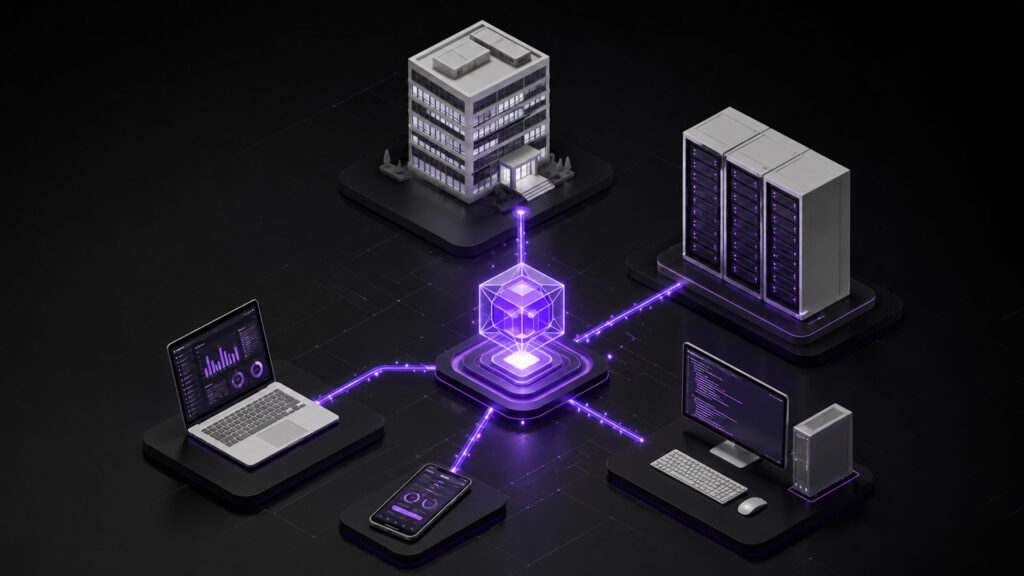
The real value of Threat Intelligence is unlocked when external intelligence is combined with internal telemetry.
A SIEM platform such as Splunk can automatically enrich security events with contextual information from Threat Intelligence feeds, allowing analysts to better understand the risk behind each alert.
Common use cases include:
- Alerting when an IP address observed in logs is linked to an active malicious campaign
- Detecting authentication attempts involving compromised accounts
- Correlating login activity with leaked credentials
- Identifying communications with Command-and-Control (C2) infrastructure
- Prioritizing incidents based on threat actor reputation and risk level
By adding external context to internal events, analysts can focus on genuine threats instead of spending valuable time investigating false positives. This not only improves detection quality but also accelerates incident response and helps security teams make better-informed decisions.
From reactive detection to proactive security
The evolution of modern Security Operations Centers (SOCs) depends on expanding visibility beyond the organization’s own infrastructure.
Threat Intelligence does not replace a SIEM. Instead, it enhances existing monitoring by providing external context that helps answer critical questions, such as:
- Have our employees’ credentials appeared in recent data breaches?
- Is malicious infrastructure targeting our organization?
- Has our company been mentioned by ransomware groups?
- Are our domains being used in phishing campaigns?
- Which attack techniques are currently targeting our industry?
Having the answers to these questions before malicious activity reaches internal systems allows organizations to reduce risk, strengthen their security posture, and significantly minimize the impact of future incidents.
Looking beyond the logs
Modern cybersecurity is no longer just about collecting and analyzing logs. Organizations that rely exclusively on internal telemetry risk discovering attacks only after the damage has already begun.
By combining Threat Intelligence, OSINT, Dark Web monitoring, Credential Leak detection, and behavior-based analytics (IOAs) with platforms such as Splunk, organizations gain a broader view of the threat landscape and can identify risks much earlier in the attack lifecycle.
This proactive approach improves detection, helps security teams prioritize the incidents that matter most, and enables faster, more effective response.
In today’s constantly evolving threat landscape, success is no longer determined by who collects the most data, but by who can transform intelligence into timely action.
The organizations best prepared for tomorrow’s cyber threats will be those that combine internal visibility with external intelligence, enabling their Security Operations Centers to anticipate attacks rather than simply react to them.